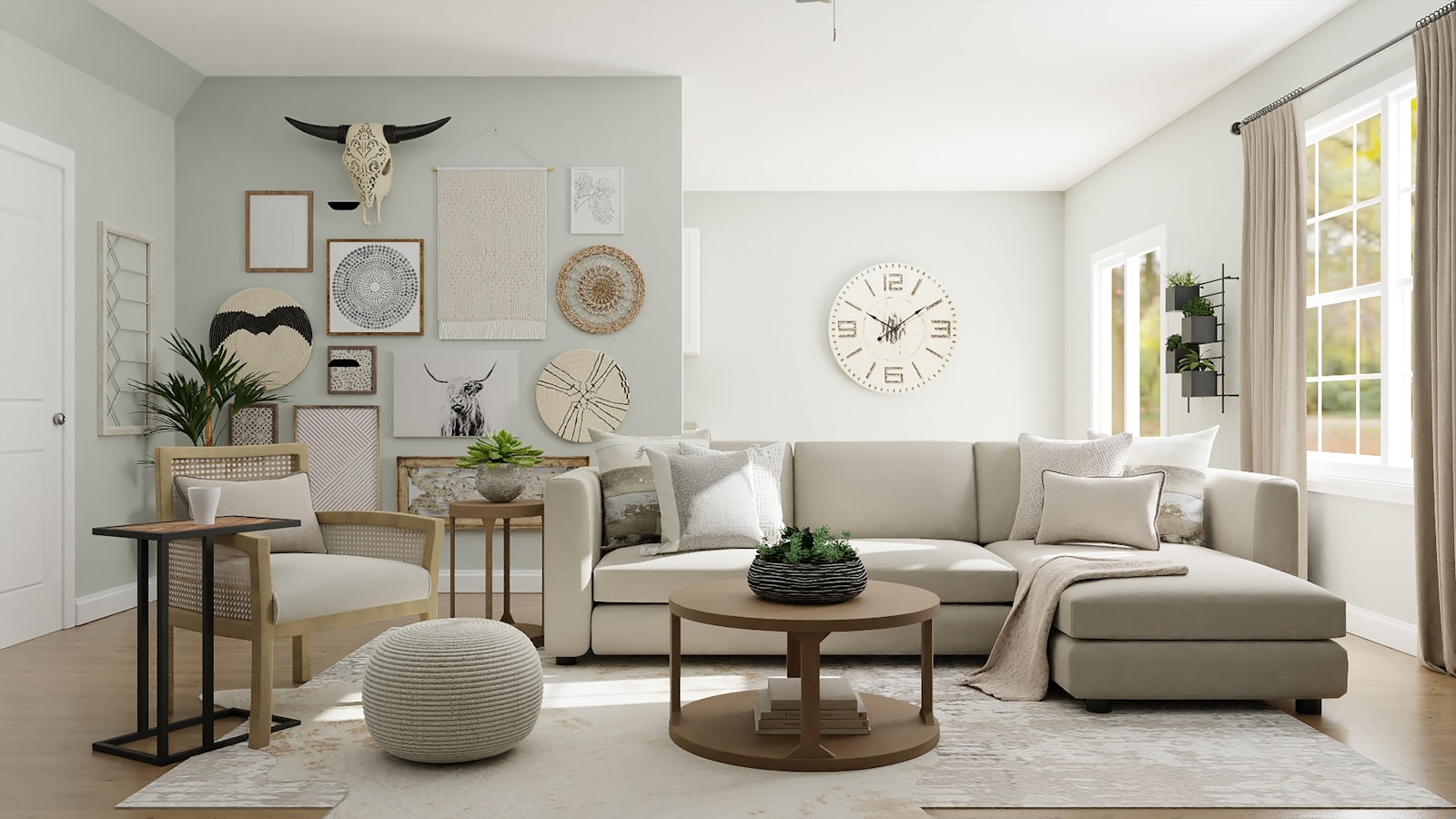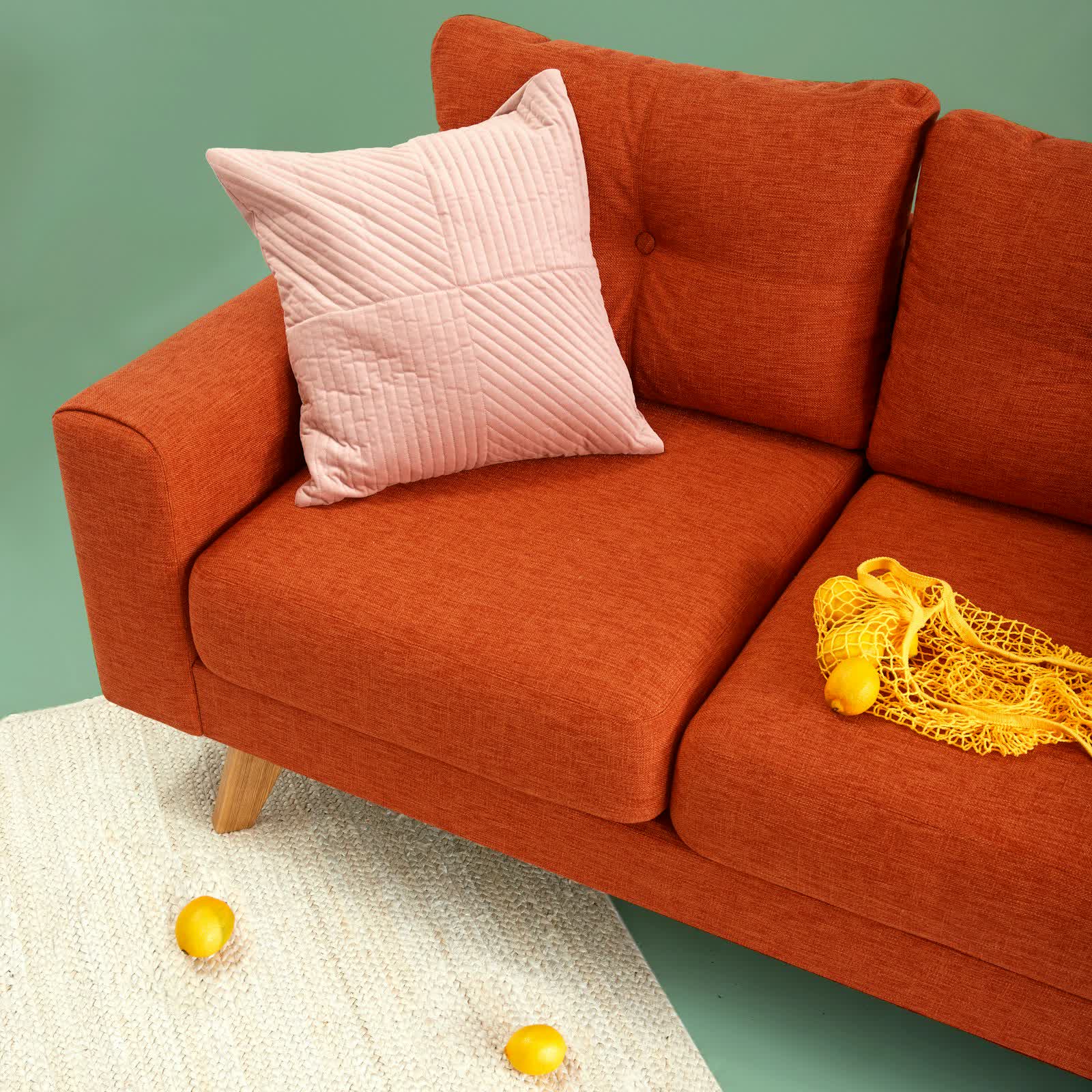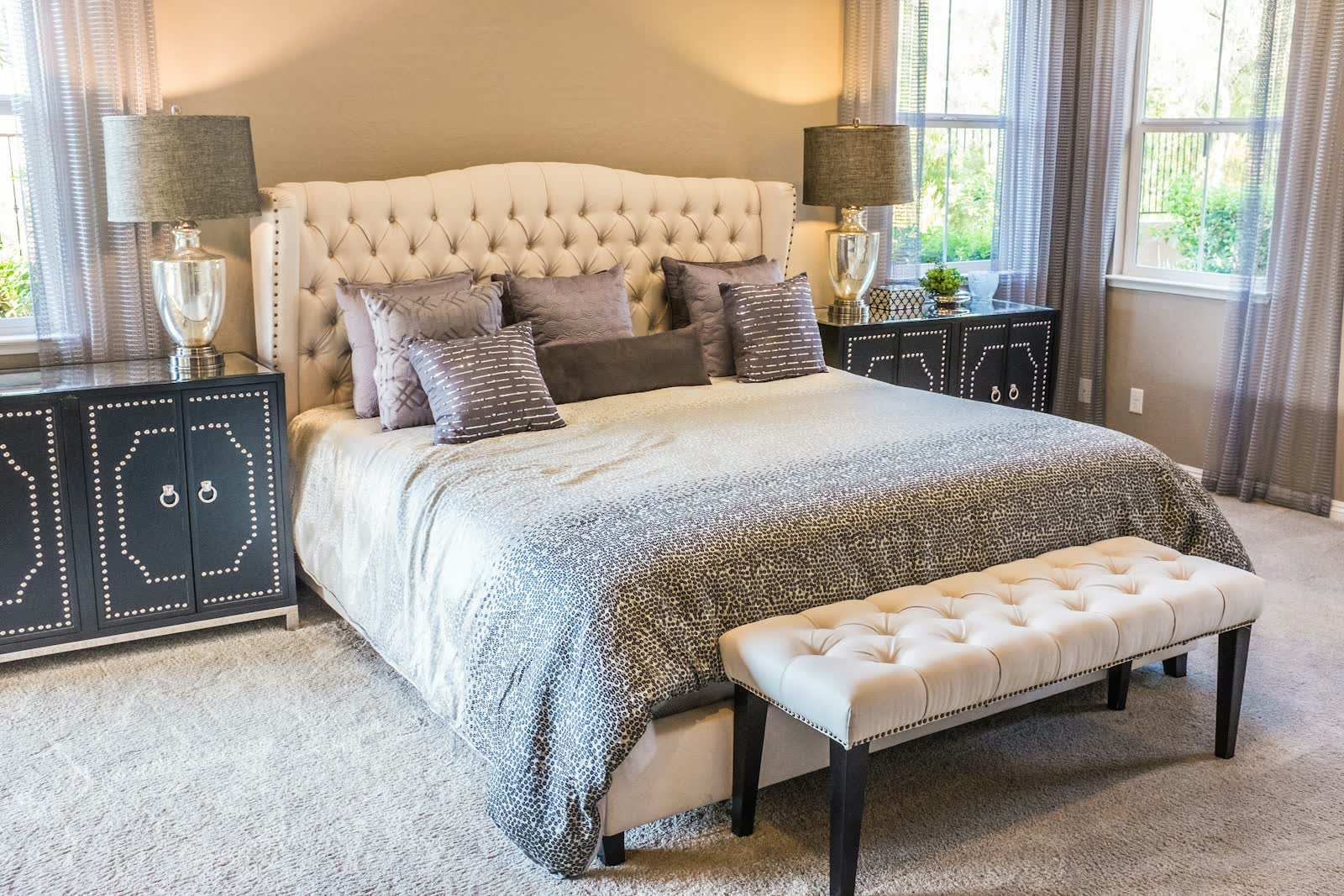
Take any bedroom you've ever wanted to climb straight into and count the textures. You'll almost always land on five: something washed, something knitted, something nubby, something wooden, something ceramic. That's a pattern, which means you can copy it, and you don't need a design degree or a big budget to do it.
Most people assume a calm bedroom is about color, paint everything in shades of oatmeal, and then wonder why it still feels like a waiting room. Usually the missing piece isn't paint at all. Add a wool blanket and swap a plastic lamp for a ceramic one, and the same beige room suddenly feels like somewhere you'd want to be. Two objects, two textures. Counting them is what this whole rule comes down to.
Texture 1: The washed base
Linen is the foundation layer. Washed linen or cotton percale gives the bed that lived-in, slightly rumpled look. Iron-flat bedding reads as hotel, softly crumpled reads as home. Start here, since it's the texture you actually sleep against, and get it right before you spend a cent on anything decorative.
A stonewashed linen duvet cover runs somewhere between $90 and $200 depending on thread source, and it's worth paying for real linen over a linen-look cotton blend. The blend photographs fine but goes limp after a few washes, while linen actually softens and gets better with age. If the budget is tight, buy the fitted sheet and pillowcases in linen first and keep a cheaper cotton duvet cover underneath. Nobody touches the duvet cover at 2 a.m., they touch the sheet.
One mistake worth flagging early: buying pure white linen because it looks crisp in photos. In a real room, with real lamp light, stark white reads cold. Go for a warm off-white, oatmeal, or clay instead, something closer to the color of raw flax, and the whole bed relaxes.
Texture 2: The heavy knit
Weight reads as comfort, before you even touch it. A chunky wool throw folded in thirds across the foot of the bed adds depth right away. One is enough. Drape two and it starts to look staged for a photo, like a hotel bed nobody actually sleeps in.
Look for a throw that weighs something. Cheap acrylic throws are light and slippery and slide off the bed within a week. A wool or wool-blend throw with real cable knit or a chunky rib has enough weight to stay folded where you put it. Aim for at least 50-inch by 60-inch so it drapes properly over a queen or king footboard instead of looking like a place mat. Expect to pay $60 to $150 for something that will still look good in five years, versus $25 for something that pills after five washes.
Texture 3: The nubby accent
Bouclé, waffle, some coarse basketweave: one lumbar pillow in a nubby fabric breaks up the smooth field of the bedding. Keep it in the same temperature family as everything else, so warm whites with warm neutrals, never one stray cool grey pillow that fights the rest of the room. That's the single most common mistake we see: someone picks a beautiful bouclé pillow, but it has a blue undertone against a warm-beige bed, and the eye catches on it every time.
A 12-by-20-inch lumbar in bouclé or waffle weave is usually $30 to $60 with the insert. Don't buy the cover without an insert, the flat, empty-looking pillows you get from cover-only kits never sit right against a headboard. If you already own decorative pillows in a smooth fabric, you likely don't need to replace them, just add one textured piece in front rather than swapping the whole set.
Texture 4: Wood, somewhere visible
A bench at the foot of the bed, a nightstand, even a plain wood bed frame. The room needs one honest wood surface to anchor all that softness, or it starts to feel like a pile of fabric with no structure underneath. Cane and rattan count double, since they bring wood and weave at once, which is why a rattan headboard or a cane nightstand door does more work per square foot than most single pieces in the room.
This is also the texture people skip because it feels like the expensive one. It doesn't have to be. A secondhand wood bench refinished with two coats of tung oil costs under $40 in materials and a weekend. If you're buying new, a solid oak or ash nightstand starts around $150 to $300 and will outlast three rounds of trend-chasing furniture. What you want to avoid is a laminate piece with a wood-grain print. Under lamp light the texture goes flat and you can tell in about half a second that it isn't real.
Texture 5: The ceramic finisher
End with something that holds light. A ceramic lamp base with a linen or paper shade is the classic move. It adds the fifth texture and controls the thing that matters most in a bedroom, which is warm, low light right next to where you sleep.
Ceramic reads differently from every other material in the room. It's smooth but not shiny, and it catches lamp light in a way glass and metal don't. A hand-thrown or hand-finished ceramic lamp base usually shows small variations, a slightly uneven glaze, a thumbprint dimple near the foot, and those imperfections are what make it look considered rather than mass-produced. Budget $50 to $120 for a decent ceramic base with a fabric shade, and choose a bulb around 2700K. Anything higher on the color temperature scale starts to look like an office.
The Texture Stack

Five textures in one palette will usually beat ten colors in one texture.
Keeping it calm, not cluttered
- Stay inside one temperature. All warm neutrals, or all cool, but not a mix, and check fabric swatches under your actual bedroom lamp before buying, since store lighting hides undertones.
- Vary the scale, so fine linen against a mid waffle against a chunky knit. Three textures at the same scale reads as flat no matter how different the materials are.
- If a surface already has two textures on it, it doesn't need a third. A patterned rug under a textured bench under a woven basket is one layer too many, pick two.
- Add texture in the order above, linen first, ceramic last. Buying the lamp before the bedding is sorted usually means the lamp ends up fighting the sheets instead of finishing them.
When five textures is the wrong number
The rule breaks down in a few situations, and it's worth knowing them before you go shopping. A small bedroom, anything under roughly 100 square feet, usually reads better with three or four textures rather than five. Extra layers in a tight room start to feel like clutter rather than comfort, since there's less negative space to let each texture register on its own.
It also doesn't apply if you already have a strong pattern doing the work, a patterned wallpaper or a bold headboard fabric, for instance. In that case the pattern is carrying visual interest that texture would otherwise provide, and stacking five separate textures on top of it usually looks busy rather than rich. Drop to two or three quiet textures and let the pattern lead.
And if you rent and can't change flooring or paint, don't force wood into the room through furniture you don't actually want. A nightstand you dislike doesn't become worth it just because the rule says you need a wood layer. Cane, rattan, or even a wood picture frame can cover that texture without a full furniture commitment.
The Finishing Touches
The five-texture rule works because it puts a limit on all that layering. The room still feels generous, but every layer has a reason to be there, and nothing is fighting for your attention while you're trying to fall asleep. Start with the linen, add one texture every week or two instead of buying the whole stack at once, and stop when the room feels finished rather than when you hit five. Some rooms genuinely stop at four.
Disclosure: This post contains affiliate links. If you buy through them we may earn a small commission at no extra cost to you. We only feature pieces we'd style ourselves.