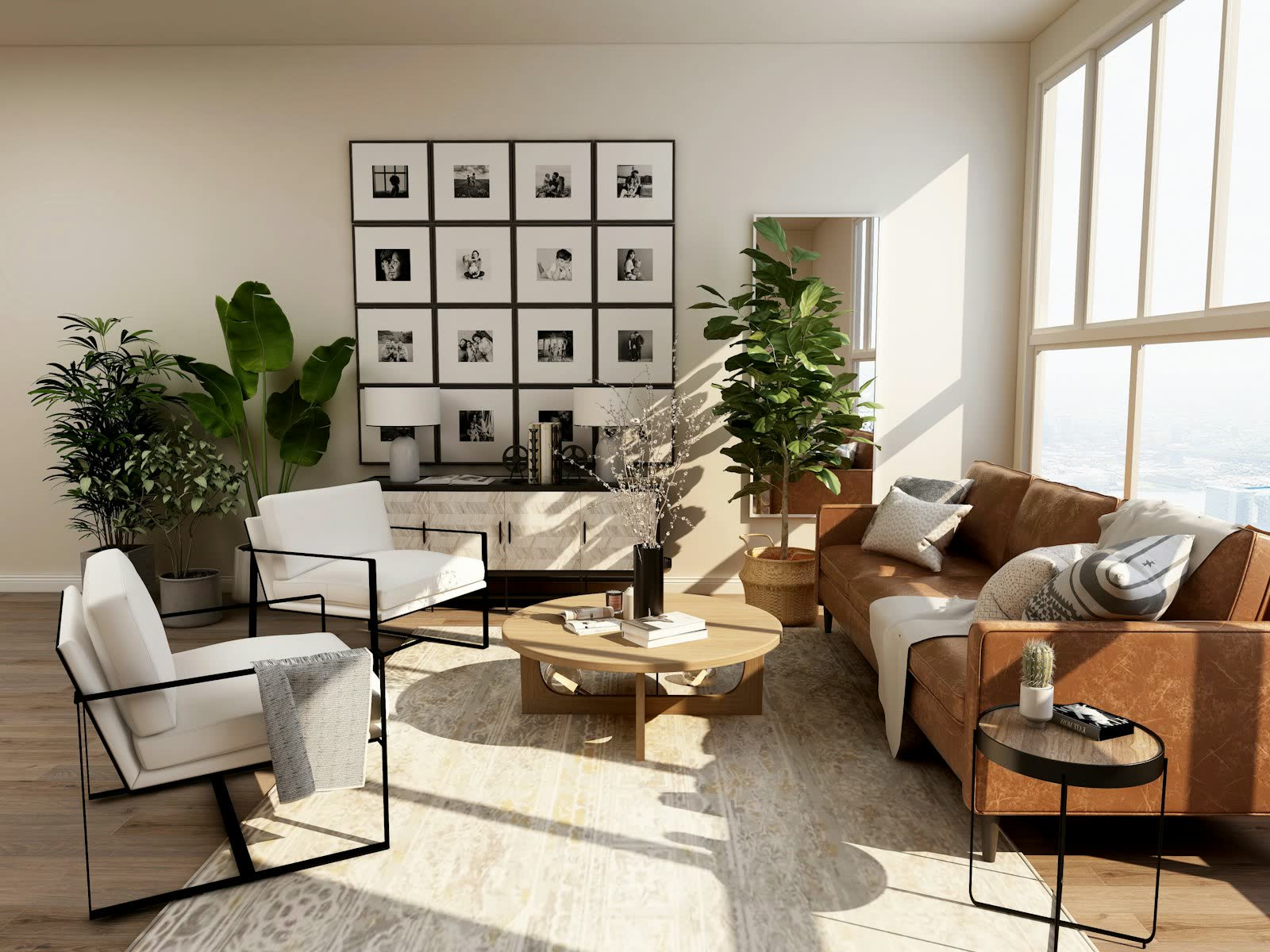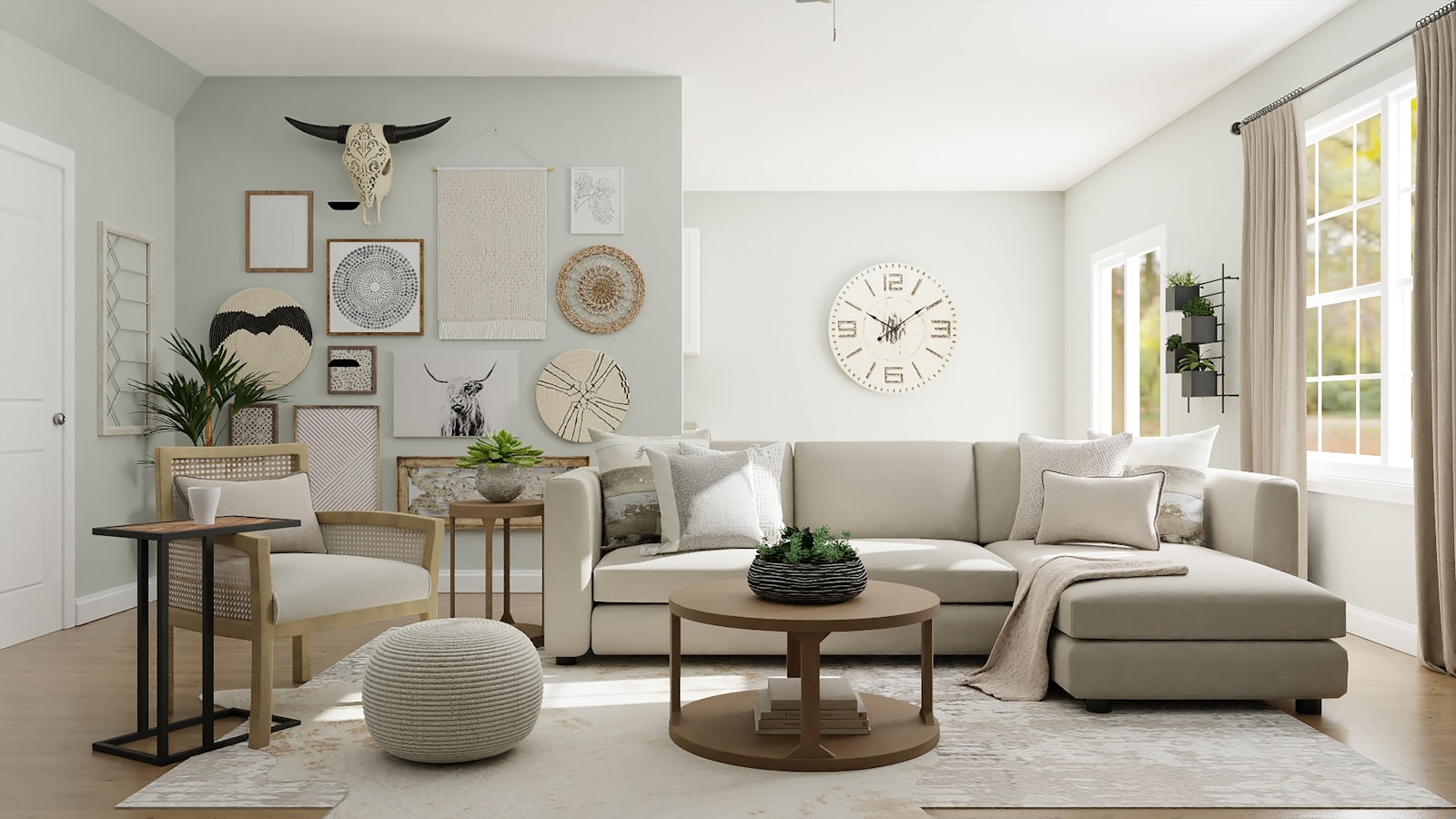
The fastest way to make a small living room feel expensive is to stop fighting its size and start layering warmth instead. Terracotta and walnut carry most of that here.
Below are the five moves our editors keep coming back to. Each one is small on its own. Stack them together and the room starts to look like it was properly planned.
1. Anchor with a walnut-toned base
Start low and warm. A walnut coffee table or media console grounds the room and gives every other tone something to lean against.
A walnut coffee table around 42 by 22 inches runs $180 to $350 if it's veneer over plywood, and $500 to $900 for solid wood that will actually take a knock and still look fine ten years in. Veneer tends to be a two-year purchase in a small room: the corners sit right in the walking path, they chip first, and once the plywood shows through there's no sanding it back.
Keep the wood matte rather than glossy. It reads softer and more natural, on camera and in person.
The mistake we see most is buying every wood piece from one collection so it all matches exactly. That reads flat, closer to a furniture showroom than a room someone lives in. Designers mix two wood tones on purpose, as long as they share the same warm undertone. Walnut and a lighter white oak side table sit together fine because both lean amber, not because they're the same wood.
- Choose one hero wood piece, then echo it in smaller accents.
- Matte and oiled finishes photograph warmer than lacquer.
- Round edges make a tight room feel calmer and safer to move through.
One exception: if your ceiling is under 8 feet, skip the heavy walnut hero piece. A dark, large coffee table can make a low room feel like it's pressing down on you. Go for a lighter oak or a rattan-topped table instead, and save the walnut for a smaller accent, a tray or a pair of side tables.
Two matte walnut pieces are usually plenty for a room under 400 square feet, say a coffee table and a media console. A third starts to look like a wood showroom rather than someone's living room. If you already own more than two, pick the best two and let the rest go to a lighter finish or a different material altogether, like woven rattan or powder-coated metal.
2. Build the terracotta layer
Terracotta is your accent, not your wall color. Bring it in through textiles and ceramics first, a throw or a cushion or a vase, so you can move it around later.
A hand-thrown terracotta vase runs $35 to $80 depending on size, and a linen cushion cover in rust or clay is usually $25 to $45. That's a much lower-risk way to test the color than a terracotta accent wall, which still needs primer, two coats, and most of a weekend even in a small room.
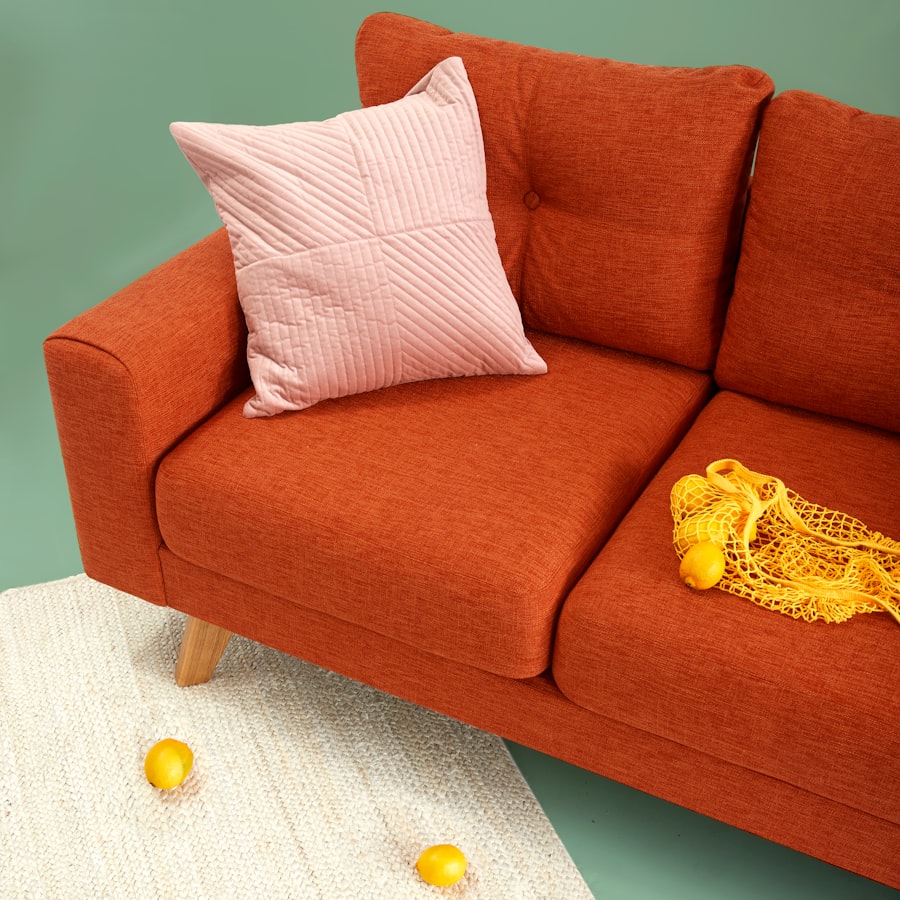
Terracotta textiles add warmth you can rearrange in seconds.
Most people either underdo this or overdo it. As a rough guide, terracotta should show up in maybe 10 to 15 percent of what you can see from the doorway, one or two textiles, a vase, perhaps a lampshade. Past that, the room stops reading as warm minimalist and starts reading as a themed rental.
The Terracotta Layer
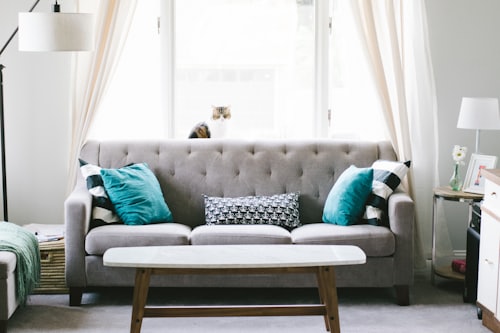
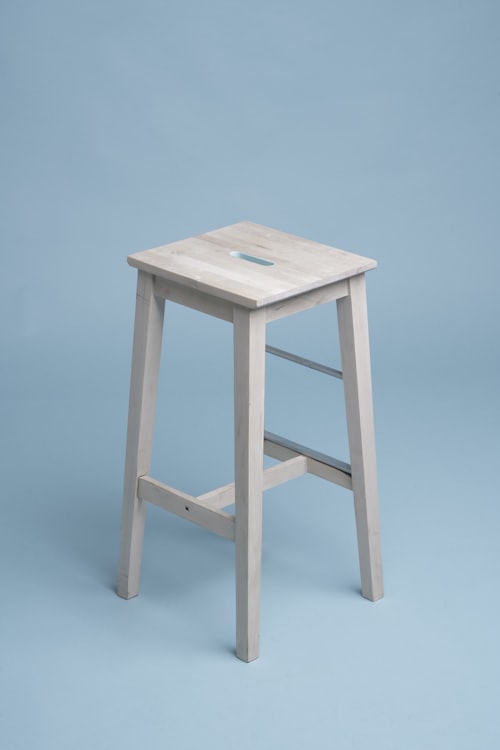
3. Add a biophilic, jade-green note
One green note ties it all together. A single deep-jade thing, a velvet pouf or a trailing plant, keeps all the warm tones from feeling like one note.
One cool accent makes every warm tone in the room look more deliberate.
Where to place it
Put your green note at eye level when you're seated. It pulls your eye across the room, which makes the space feel a bit larger than it is.
A trailing pothos in a 6-inch pot costs about $15 to $25 at most nurseries, and it tolerates the low light a lot of small living rooms get from a single window. If your room gets almost no natural light, skip live plants rather than replacing a dying one every few months. A dried pampas stem or a dark green ceramic object does the same visual job without the upkeep.
The Biophilic Edit
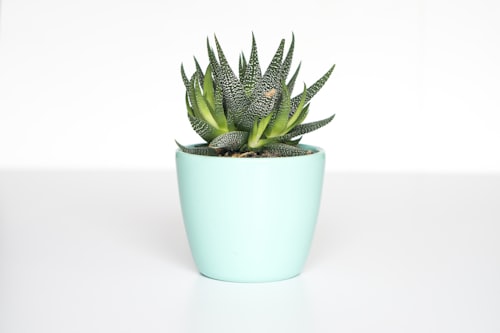

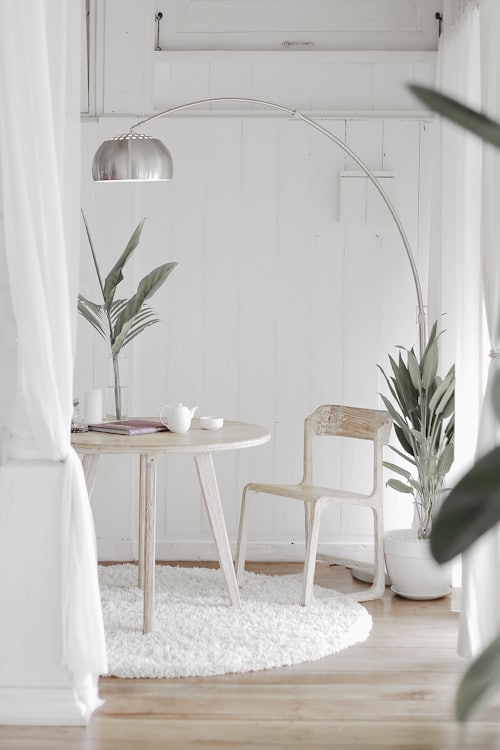
4. Layer light, not lumens
Three sources beats one bright bulb. A floor lamp, a table lamp, and a candle give a small room the depth that a single ceiling light tends to flatten out.
Stick to warm bulbs, 2700K or lower, in every fixture in the room. Cool white bulbs at 4000K and up fight with terracotta and walnut no matter how nice the lamp itself looks. A basic floor lamp runs $60 to $150, a table lamp $40 to $90, and a dimmer switch for the overhead light, if your wiring allows it, is around $15 in parts plus an electrician's time.
The mistake is relying on the ceiling fixture alone because it's already there and free to use. One bright source directly overhead flattens shadows and makes a small room look almost clinical. Turn it off in the evening and let the floor and table lamps carry the room instead.
5. Finish with one organic texture
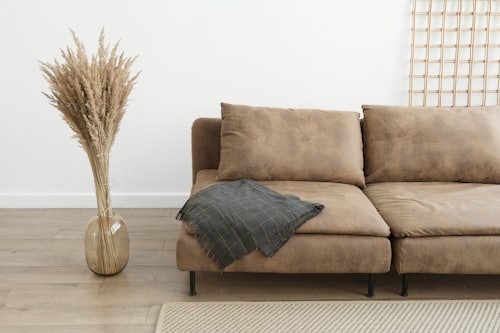
End on something tactile. A jute rug, a bouclé cushion, a rattan tray. One of those adds the last layer that makes a room feel gathered over time rather than bought in one trip.
Size your rug generously. The biggest mistake in a small living room is a rug so undersized it floats in the middle of the floor like a bath mat. At minimum, get one that reaches under the front legs of your sofa and any chairs, even if that means going bigger than feels intuitive for the square footage. A 5x7 jute rug runs $80 to $180; a wool-blend version with a similar look costs closer to $250 to $400 and wears better underfoot.
That's the whole idea behind warm minimalism. It should look effortless, even though every layer was chosen on purpose.
A note on layout before you buy anything
None of this works if the furniture doesn't fit the room. In a living room under 400 square feet, leave at least 30 inches of walking space between the sofa and the coffee table, and roughly the same between the coffee table and any TV console. If you can't fit that gap, the table is too big, not the room too small. A common mistake is buying a sofa that looked modest in a showroom with a 20-foot ceiling, then wondering why it swallows an entire wall at home. Measure your actual wall length and subtract at least 12 inches on either side before you shop.
Angling the sofa away from the wall, even by 10 degrees, breaks up the boxy feel a lot of small rectangular rooms have by default. It costs nothing and takes five minutes to test before deciding it isn't for you.
Curtains matter more than people expect in a small room. Hang the rod 4 to 6 inches above the window frame rather than right on top of it, and let the panels graze the floor instead of stopping short at sill height. That extra height reads as a taller ceiling from across the room, and it's one of the cheapest changes on this whole list, usually under $60 for a plain linen panel and a basic rod.
Done in stages rather than one big spree, the whole look costs somewhere between $500 on the low end (a vase, two cushions, a lamp, a small rug) and $1,800 if you're replacing the coffee table and rug at the same time. Start with the textiles. They're cheap, reversible, and they'll tell you fast whether you actually want terracotta in your space before you commit to anything permanent.
Disclosure: This post contains affiliate links. If you buy through them we may earn a small commission at no extra cost to you. We only feature pieces we'd style ourselves.